
Sidewalks, Walkways & Flatwork
Create safe, attractive pathways and concrete surfaces that enhance your property's accessibility and curb appeal.
Why Quality Walkways Matter
Sidewalks and walkways do more than just get you from point A to point B. They define spaces in your yard, protect landscaping from foot traffic, and keep mud off your shoes. Well-designed walkways improve your home's curb appeal and make your property more inviting. They also provide safe, accessible routes around your home for family members and guests.
Concrete is the ideal material for walkways. It handles heavy foot traffic without wearing down. Rain and temperature changes do not affect it like other materials. You can clean it easily and it stays level and stable year after year. Whether you need a simple path from your driveway to your front door or an elaborate walkway system around your entire College Station property, concrete delivers lasting performance.
Types of Concrete Flatwork
Flatwork refers to any horizontal concrete surface. We install many types of flatwork for residential and commercial properties:
- Front walkways: Connect your driveway or street to your front entrance, creating a welcoming path for visitors
- Garden paths: Wind through landscaping and define routes through your yard
- Side yards: Provide access along the sides of your home for maintenance and utilities
- Backyard walkways: Link patios, pools, sheds, and other outdoor features
- Public sidewalks: Meet municipal requirements along streets and property lines
- Accessibility ramps: Provide wheelchair and mobility device access with proper slopes and surfaces
- Step landings: Create safe level areas at the top and bottom of stairs
Each type requires specific planning for width, thickness, and finish to suit its use and location.
Design Considerations
Good walkway design balances function and appearance. Width matters. A main front walkway should be at least 4 feet wide to allow two people to walk side by side comfortably. Secondary paths can be narrower, around 2 to 3 feet. Curves create visual interest and work naturally with landscaping, though straight paths cost less and use space efficiently.
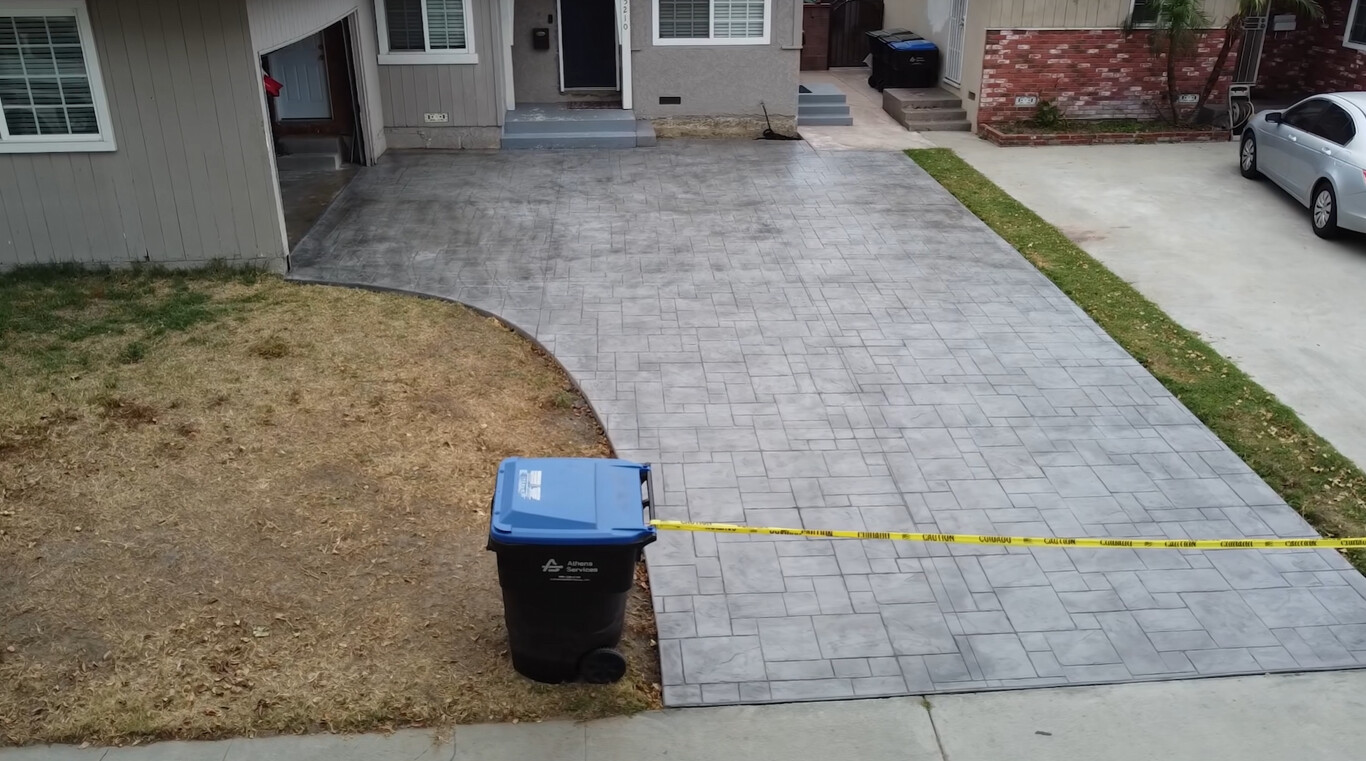
Slope is important for drainage. Walkways need a slight pitch (about 1 to 2 percent) so water runs off instead of pooling. We also consider how the walkway connects to existing features like your driveway, patio, and entrance areas. Smooth transitions and proper grades prevent tripping hazards and look professional. Decorative elements like borders, patterns, or stamped finishes can turn a basic walkway into a landscape feature.
Installation Process
Installing quality walkways follows a systematic process. We start by laying out the path and marking its location. We check for underground utilities and plan around sprinkler systems or other obstacles. Then we excavate to the proper depth, typically 6 to 8 inches depending on soil conditions.
Next comes base preparation. We install compacted gravel that provides drainage and a stable foundation. We set forms to define the edges and create the desired shape. For walkways, we typically pour 4 inches of concrete, which is thick enough for foot traffic and light equipment like lawn mowers. We finish the surface with a broom texture for traction or your choice of decorative finish. Control joints go in every 4 to 5 feet to control where cracks form, keeping them straight and less noticeable.
Meeting Code Requirements
Some walkway projects require permits and need to meet local building codes. Public sidewalks along streets must follow municipal specifications for width, thickness, and placement. Accessibility ramps have strict requirements for slope, width, handrails, and landing sizes under ADA guidelines.
We stay current on all code requirements and handle permit applications when needed. Our installations meet or exceed these standards, so your walkways pass inspections the first time. This matters for your protection and property value. Improperly built walkways can create liability issues if someone gets injured. Code-compliant construction protects you and ensures your walkways serve their purpose safely.